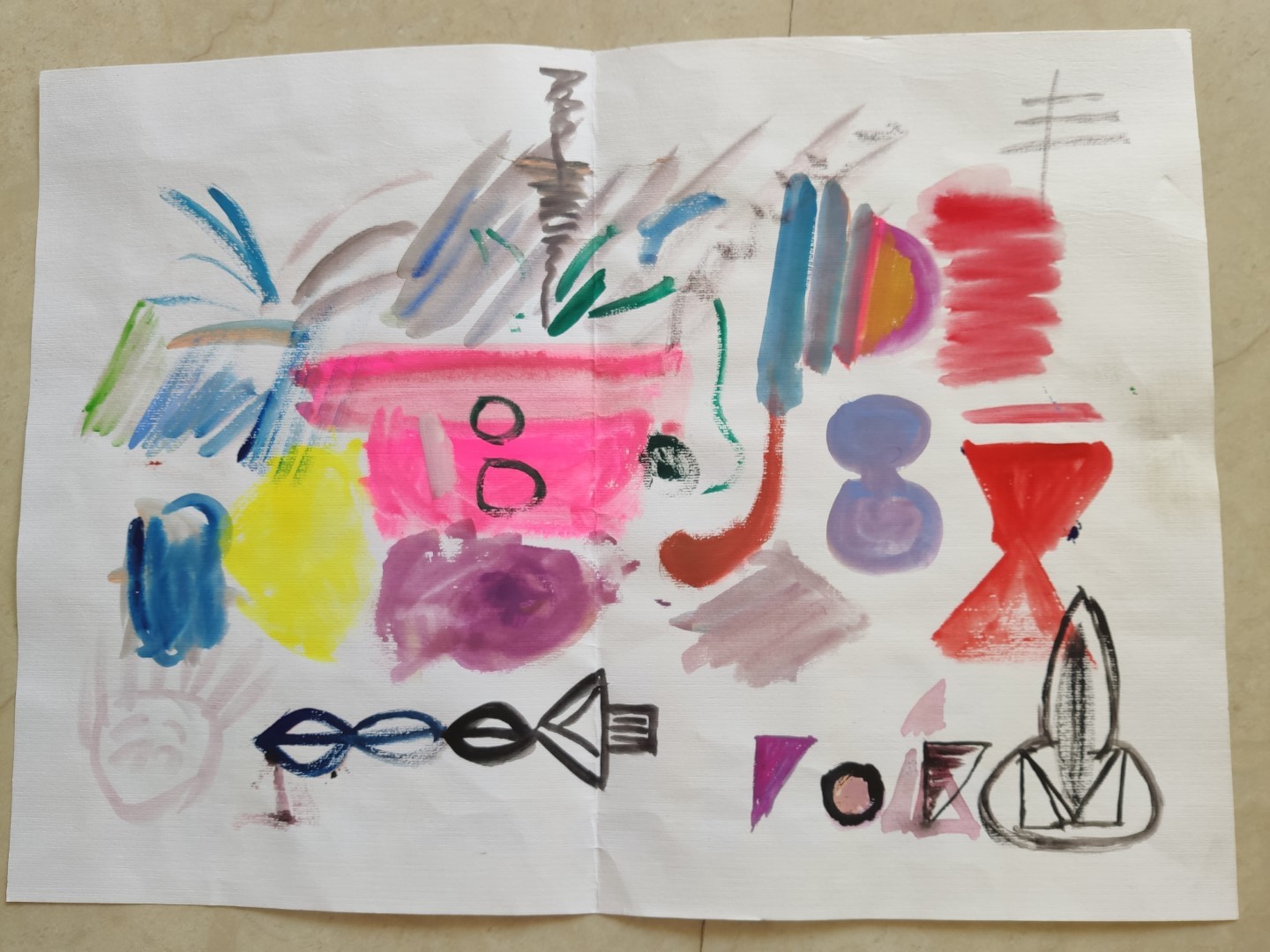
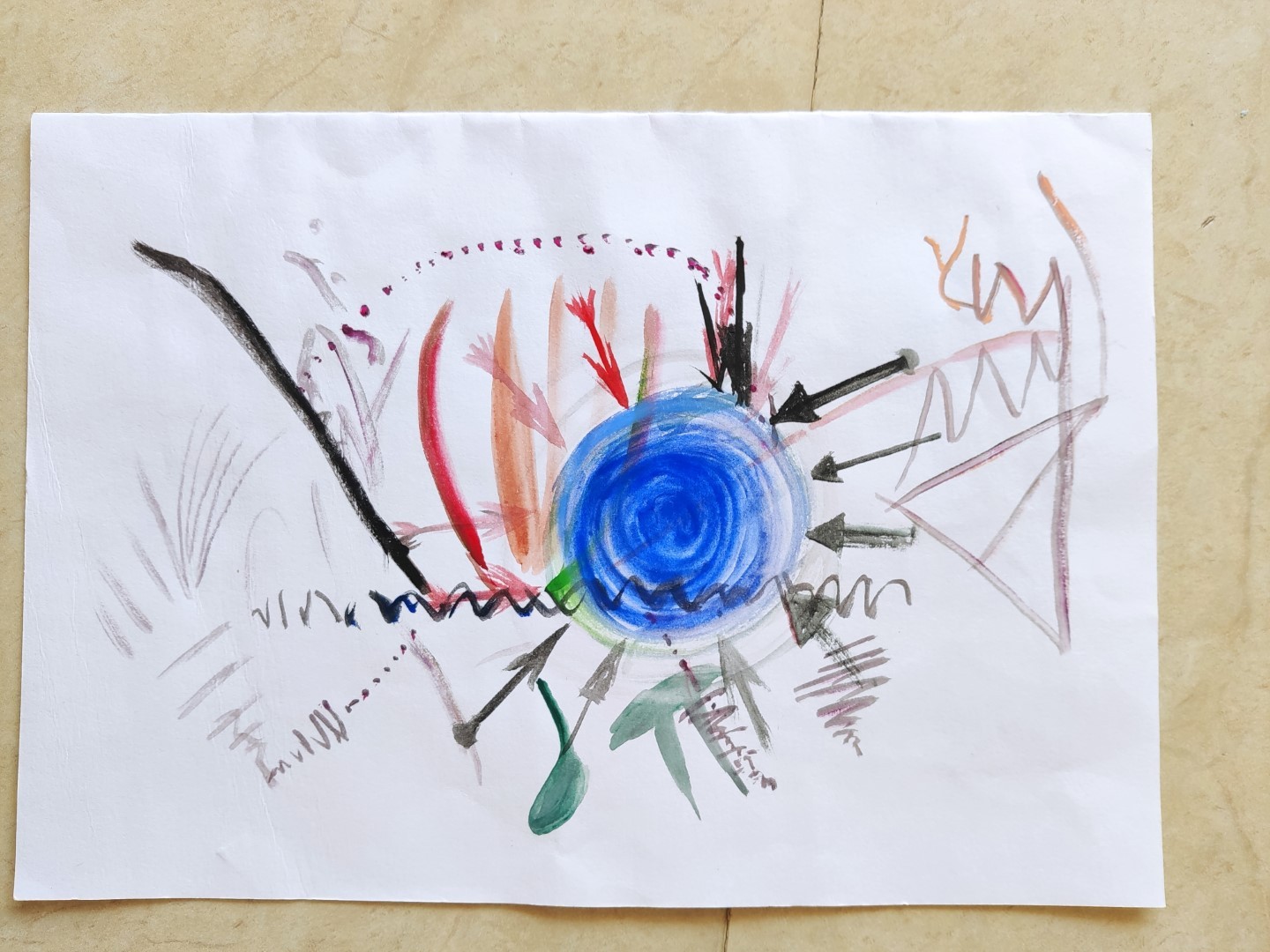
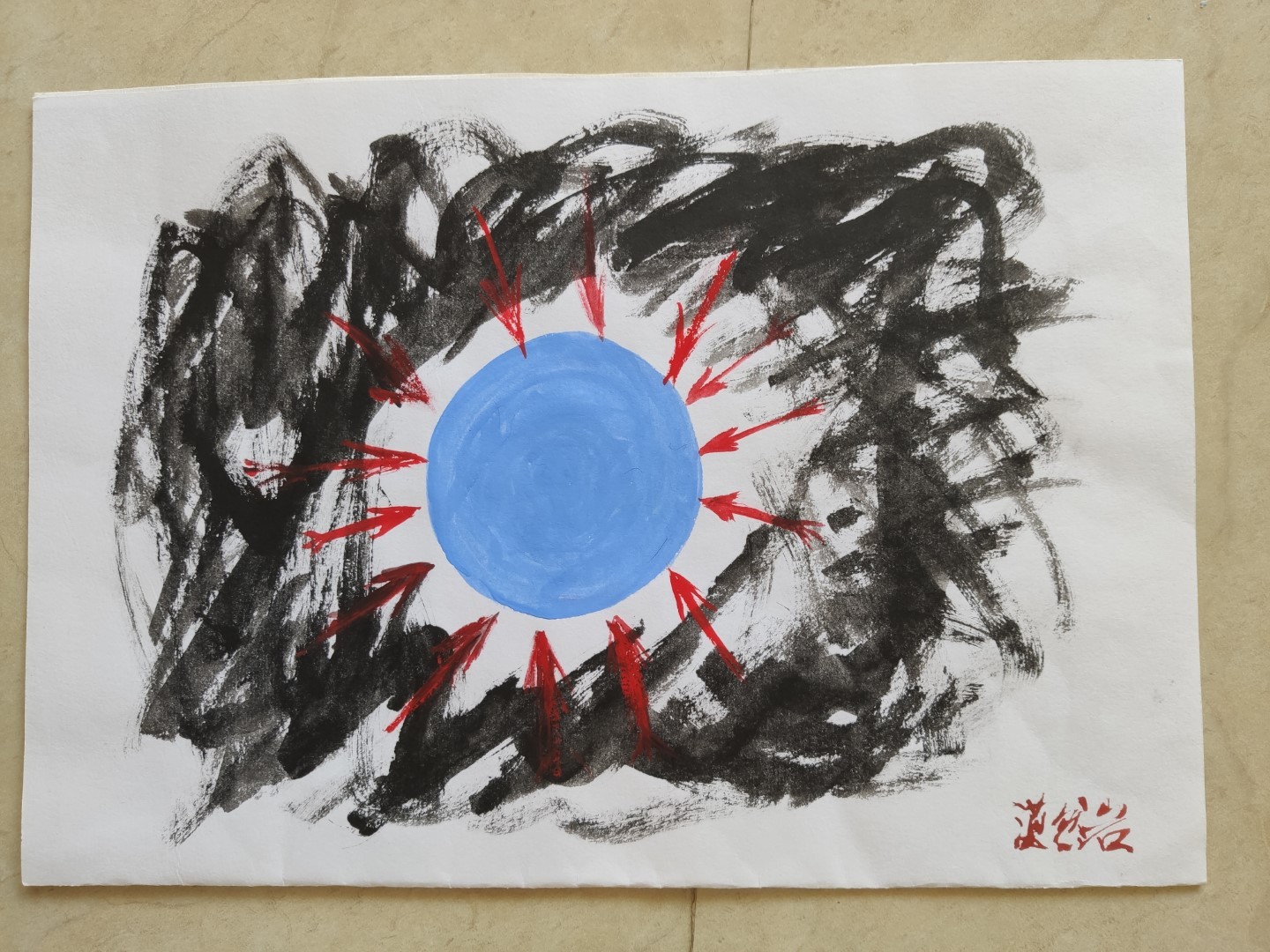
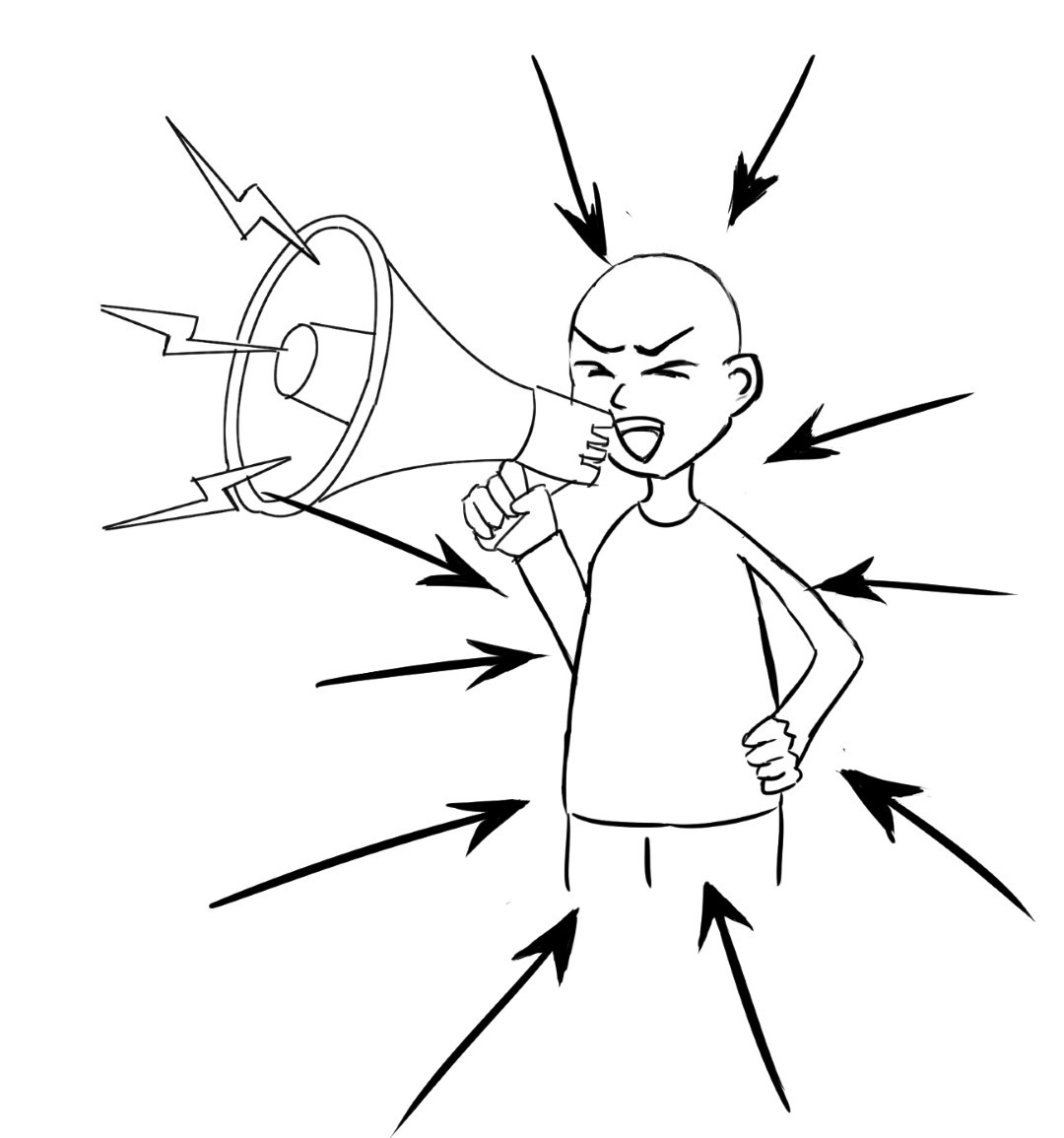
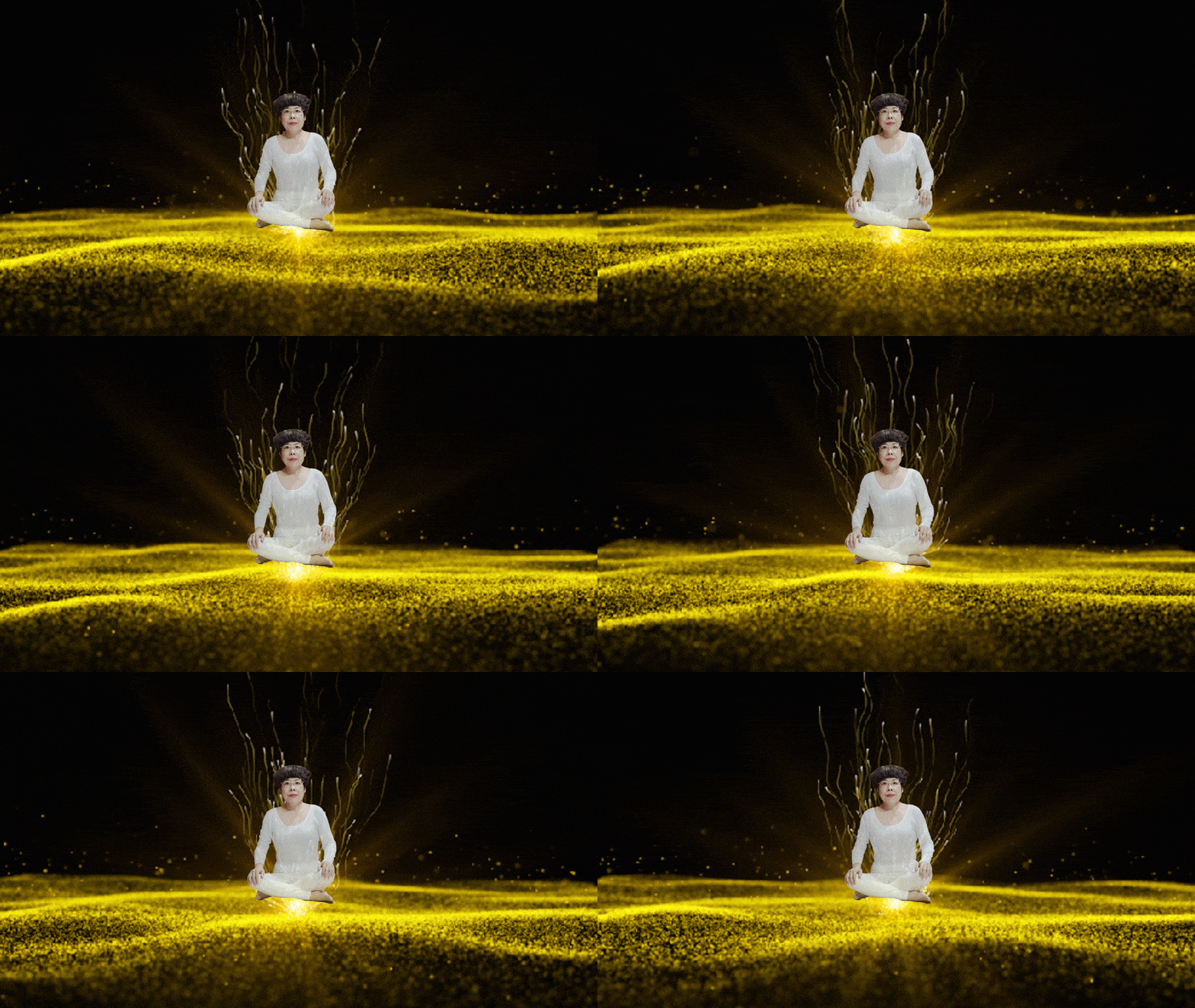
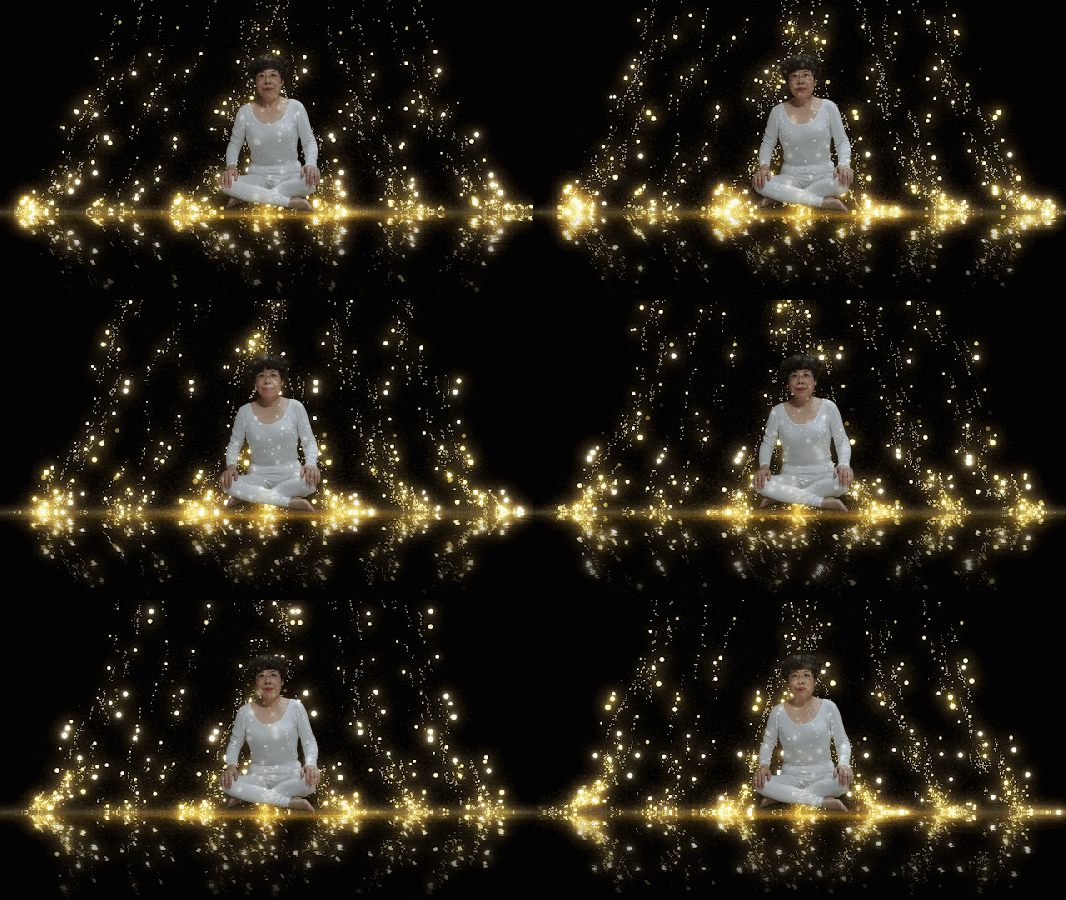
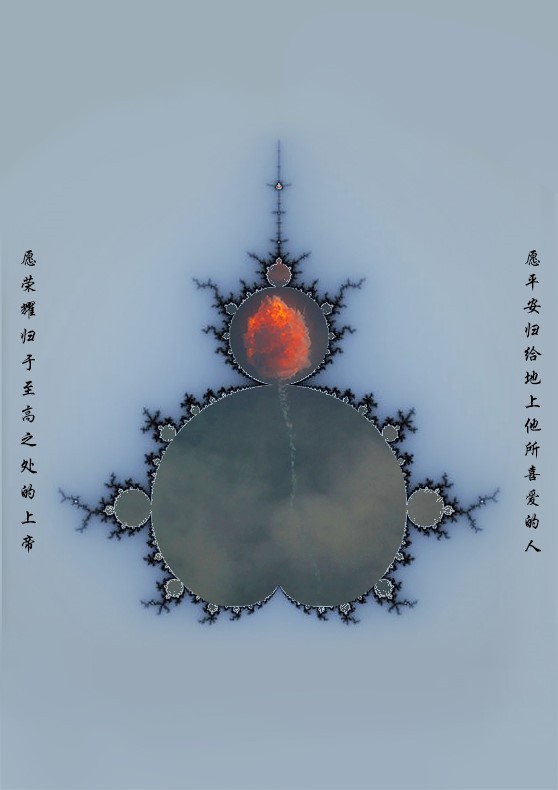
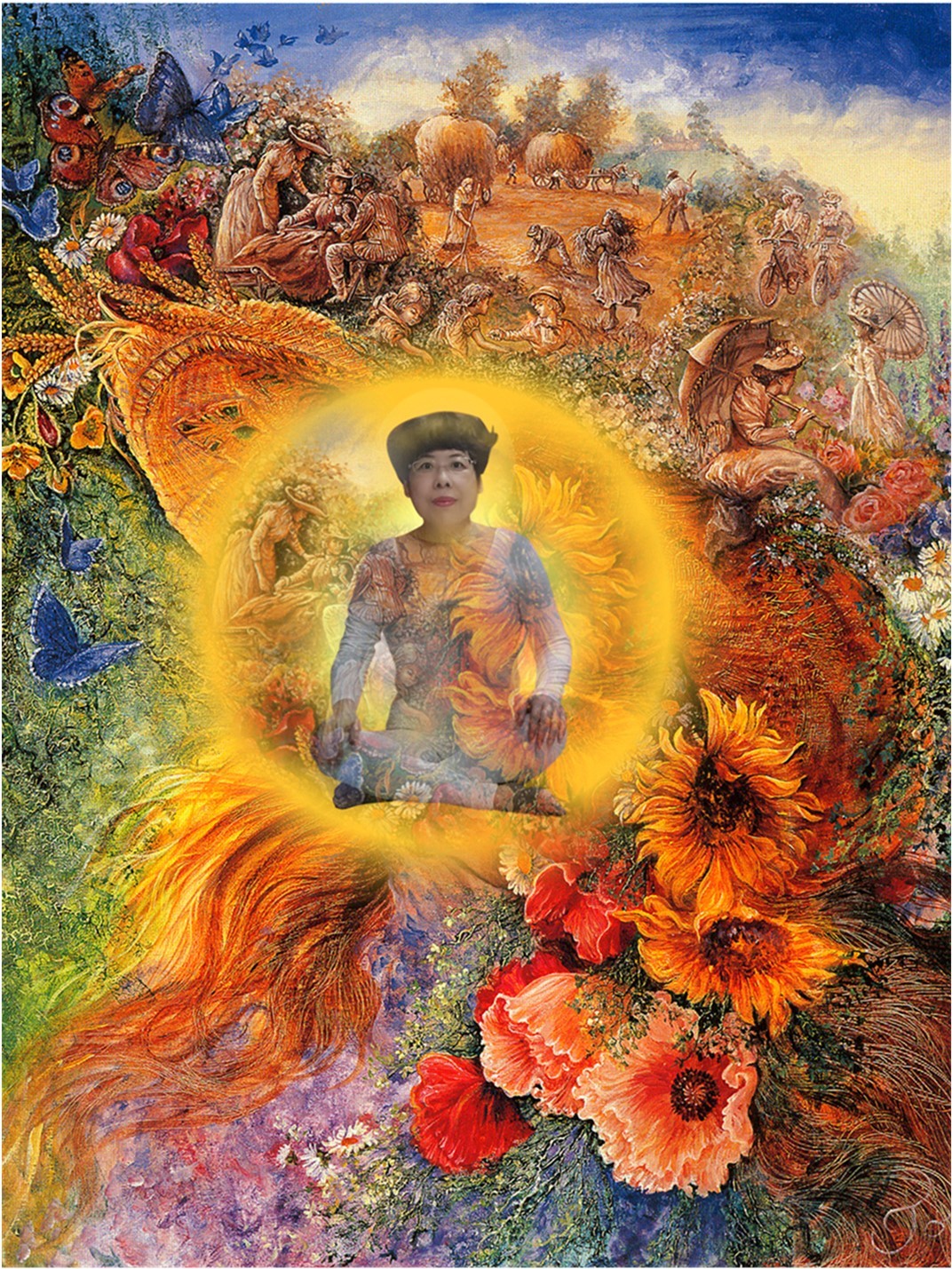
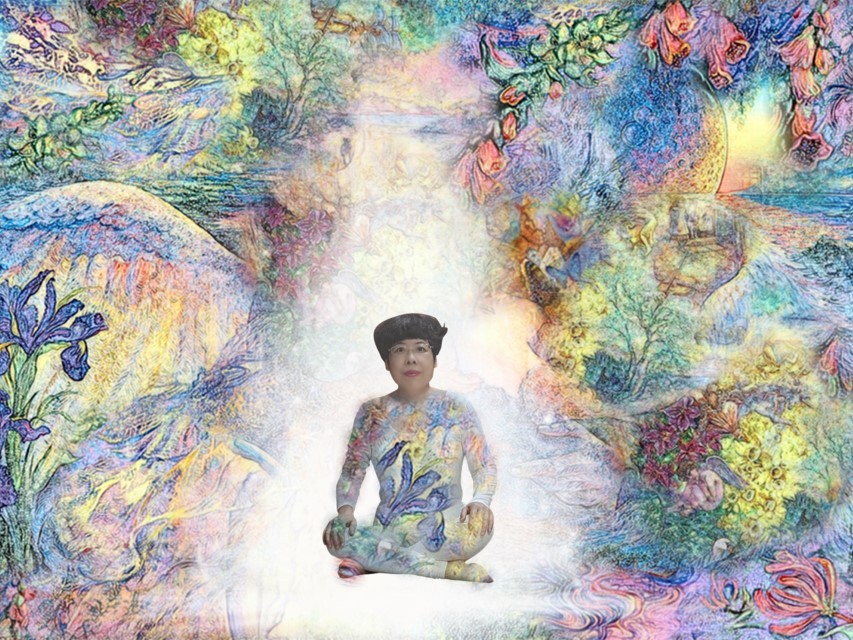
My name is Crystal Ocean, I craft energy-infused images to combat obsessive-compulsive disorder, seek solace for the inner child, and offer insights to other sufferers.
Preface
In this world, death is not to be feared, for humans have souls. What is truly fearful is a fate worse than death while alive. I thank God for leading me to use simple edited internet images to free myself from the human hell of obsessive-compulsive disorder. In the following, I will share my experiences in three parts: Part 1: Nightmarish Childhood, Part 2: The Hell of Obsessive-Compulsive Disorder, and Part 3: The Cure for Obsessive-Compulsive Disorder: Creating Empowering Images. As my English is insufficient to directly share my experiences, I first wrote this in my native language and used AI to translate it into English. I do this to fulfill a promise I made long ago - if I ever recovered from obsessive-compulsive disorder, I would do whatever it takes to help others suffering as I did. To share my story in my country of residence, I posted it online but much was censored, likely to avoid tarnishing the glorious national image. To avoid unnecessary trouble, I have replaced sensitive names with English capital letters.
Part One: A Nightmare-like Childhood
I do not think my birth is something to be thankful for or celebrated. Below is a note I wrote on April 11, 1997.
"An individual is passively created, intentionally or unintentionally, during the process of their parents enjoying physical pleasure; they are the byproducts of their parents' carnal pleasure. Before production, hardly any parents consider whether they can make this individual feel satisfied or happy. In fact, no pair of parents can ever enter the world of the individual they created to provide even a bit of help. In other words, the created beings are passively, and even reluctantly, brought into existence, yet they have to actively and alone, without any real help, undertake and face everything about living. In this sense, parents are the sinners of their children. Parents are irresponsible. Although not being able to provide practical help is not the responsibility of the parents, the fact that they have the initiative to choose between life and non-life, and they chose life, this, for individuals who are born and consciously unhappy, is the parents' fault."
I was born on January 19, 1966. Apparently, due to my large head, my mother labored for three days to give birth to me. According to her, she didn't receive proper care during her confinement period, which resulted in my belly becoming bloated before I was even a month old. I had to have a tube inserted into my rectum to release the gas in my stomach, and I cried day and night. Thus, when I was just over twenty days old, I was sent to be fostered by a wet nurse named Hui. Hui's family was extremely poor, and she was raising five children. I went to take over the breast milk of her last son, because Hui's husband could no longer afford to support such a large family. They sent their son away, and Hui became my wet nurse, with my parents paying them eighteen yuan a month for living expenses. I stayed with them for three years, during which time my mother would come to visit me once a year as it was a day and night's train journey from her work place to Hui's home. I learned that my wet nurse was chosen by my second aunt. Hui's family was affected by tuberculosis, so I contracted tuberculosis as a child. As far as I can remember, I had regular X-rays and penicillin shots, which made me limp, but Hui's family treated me very well. Hui's love for me was genuine, as if I were her own daughter. Unlike my mother, Hui was neither vain nor self-conscious. This experience demonstrated that my mother wasn't really prepared to be a mother and that she herself had not yet attained a fully independent personality or a sense of personal autonomy.
Childhood Scene One
In my memory, a strange man came to our house one day, and my mother forced me to call him "father." I was unwilling, frightened, and helpless, but there was no one I trusted who could help me. Perhaps this was how I felt when I first came home, as I heard that I was brought back by force. After living with Hui and her family for three years, I had become one of them. I called Hui "mother" and her husband "father"; I was truly a part of their family.
Childhood Scene Two
For some reason, probably when I was about four years old and had just returned home, I would feel sleepy whenever I had to eat. I couldn't control my drowsiness, and because of this, I would get beaten by my mother nearly to death each time. The pain was intense, and I was terribly afraid of my mother's fists, but I just couldn't resist the sleepiness. Even though this is a very distant memory, I can still vividly recall my utter helplessness and frustration when I succumbed to sleep despite my best efforts to fight it. It's heartbreaking to think of a four-year-old child having to exert her willpower to fight her own body to avoid physical pain. This story could either be a testament to human resilience or a lamentation of the human condition.
Childhood Scene Three
According to my step-grandmother and my mother, when I was about four or five years old, I went to collect fallen leaves. This involved holding a sturdy piece of wire and piercing the fallen leaves on the ground. When many leaves were strung together, I would strip them off the wire, and these leaves would be used for firewood. Many people did this at the time. One time, while I was collecting leaves, I fell and the wire pierced my mouth, nearly reaching my trachea. My mother blamed my step-grandmother for not watching me closely and beat me up as punishment. This might be a perfect representation of the cultural belief in my country that "beating is a sign of affection, scolding is a sign of love."
According to those who witnessed my childhood, I often ran out of the house screaming for help along the village path. To this day, I can still remember that sense of impending doom and desperate escape. In my childhood, our country was very poor, and our family all squeezed into one room. As long as I wasn't asleep, I could hear my parents' conversations. Once, I overheard my mother sharing an experience with my father. She said that she once hit me so hard that I stopped breathing. She thought I had died and was terrified, so she quickly tried to revive me and succeeded. My mother was a doctor, but I have no memory of this incident. I only remember that whenever my mother was not around, I felt safe and happy. When I saw my mother, I would instinctively hide behind adults because I was really afraid of her. Once, she mentioned to someone else that I seemed to dislike her very much and that I would become unhappy when I saw her. Indeed, she was right. From as far back as I can remember, my mother was the greatest threat in my life. I tried hard to recall any warm moments when my mother hugged me, but unfortunately, I could not find any traces in my memory. Of course, as an adult, I absolutely do not believe that my mother never hugged me. But I do believe that all such memories have been thoroughly washed away by fear.
In my memory, every time I fell down, I would get beaten. Because of this, I've always had a deep sense of inferiority. I just didn't understand why I couldn't even walk properly. It wasn't until I was in third grade in elementary school and saw a neighbor's child who frequently fell that I realized it wasn't my fault. As I write this, tears are falling again. As an adult, whenever I recall my childhood, I cry, perhaps as a way to compensate for the tears I should have shed in my childhood. Because back then, even when I was hit and in great pain, I couldn't cry, as crying would bring even harsher beatings. I remember very clearly once, when my sister fell, the woman who looked after her helped her up and said, "Oh, my darling." (Note: A regional expression of great affection for a child who has fallen.) I felt a deep sense of self-pity. I wondered why I couldn't be someone else's child. At that time, I must have been only about four years old, although the specific time might not be accurate. These events probably all happened in Xike. During my childhood, I moved to several different places with my parents, and in each place, I was always an outsider. However, that time might have been one of the better periods of my childhood, as I wasn't with my mother all the time and I got to play with other children my age in the village every day.
I think I was quite interesting as a child. Once, I saw a boy urinating while standing, and I also attempted to do the same. In the end, I wet my pants. I don't recall whether or not I was scolded. I also remember hearing from my mother about a time when someone was preparing to slaughter a duck, but I untied it and let it escape. However, I don't remember this incident. I also had a friend who was a few years older than me. Her name was Haiyan, and she always took care of me. She was in the first grade and taught me how to distinguish between male and female restrooms. That's how I recognized the Chinese character for "female." I found it very interesting to learn characters. I remember once she told my mom that she had helped me wipe my bottom, but I kept complaining that she didn't do a good job. Back then, we would pick up small stones from the ground to wipe.
My most miserable years were from 1971 to 1972 when my mother left Xike for Pantu. The place we lived was some distance from the village. My father was in another township and only came home once a week, so I spent all day with my mother. During that time, what I remember most is my mother insisting that I learn to write my name every day and learn to read the clock, but no matter what, I couldn't manage either task. This led to daily beatings. My mother would often pinch the flesh on my body, a particularly painful form of punishment. When I took off my clothes to bathe, my body was covered in bruises. My preferred form of punishment was when she would hit my head with her fist, which was far less painful than pinching. Because my mother believed in God, I had a vague idea of a deity, so I silently prayed for her to only hit my head with her fist when she was angry. During that time, life felt like a vicious cycle. My mother taught me to write my name and read the clock every day, I couldn't learn, and so I was beaten every day. Then the next day, the same story would repeat. Because our home was far from the village, there was nowhere for me to escape when my mother hit me. I could no longer run to the village and cry for help like I used to in Xike. There was also no one at home to rescue me. So every day, I felt like a small animal awaiting slaughter on a chopping board. The sense of despair and helplessness was so profound, it seemed to permeate every cell in my body. I believe my DNA was rewritten at that time, and the memories of those painful times are marked in the DNA of my offspring. What does it mean to be in perpetual darkness? Those days with my mother were exactly that. Every day, I hoped for the day to pass quickly because when night fell, it meant that I could go to bed and would not be tortured anymore. I was very young then, but for some reason, I already had the concept of the end of the world. I hoped for the end of the world to come every day. Perhaps this is why I am particularly fascinated with post-apocalyptic scenes in science fiction movies like "I Am Legend," "Maze Runner: The Death Cure," and "The Walking Dead." These scenes can meet my spiritual needs, they are like spiritual food, offering some comfort to my soul. Back then, I felt particularly inferior because a question always bothered me: why was I so stupid? I often stumbled when I walked, I couldn't write my own name, I couldn't read the clock, and I didn't even know how old I was. So, when I met children who could tell their age, I thought they were very smart. As for my son being able to effortlessly read the clock and write his name when he was young, I felt very relieved. It seemed as if my brain capacity was exceptionally small back then, and I could hardly remember anything. For example, when my mother asked me to buy a bottle of soy sauce, I was afraid of forgetting the word "soy sauce," so I had to jog all the way there, repeating "soy sauce, soy sauce" nonstop. But when I saw the salesperson at the supply and marketing cooperative and had to tell him that I wanted to buy a bottle of soy sauce, I would suddenly forget if the word I had been repeating all the way was indeed "soy sauce." I was always very scared because if I bought the wrong thing, I would be beaten. And if I ran back to ask again, I would also be beaten. So, I often gambled and brought home the soy sauce or other items, and it was not until I handed the things to my mother and saw that she was not angry that I could finally relax. It wasn't until I was in my 40s that I read an article in The Wall Street Journal and understood why I was so stupid back then. The article said that the intelligence of abused children could be delayed, but it would not disappear. My situation clearly was a case of delayed intelligence. Another question that had always puzzled me also found an answer many years later: the issue of my early maturity. I remember that I had developed before I was even 12 years old, which was quite unusual considering my living conditions at the time. Because of general malnutrition, children back then tended to develop late. I later learned from a science article that the bodies of abused children often develop early.
It is this heart-wrenching experience that has led me to a very different view of abortion than the traditional church. Because in my view, not every mother has the right to give birth, because a child is also a human, and their ability to feel emotions is no less than an adult's. Therefore, a mother does not have the right to give birth to a child and abuse them. If a mother is not capable of treating her child well, she should choose abortion to end the child's suffering as soon as possible, rather than give birth to them and let them endure more pain. I believe that a loving God would agree with me because I, personally, wish I had been miscarried before birth. My mother taught me to write my name and read a clock with good intentions, as she was preparing me for elementary school. However, the abuse I experienced under the guise of love is still being repeated over and over again in G countr. The so-called love of these mothers is nothing more than a devil's excuse, and these insane mothers are merely the devil's minions. I strongly agree with the practice in Western countries of using the law to protect the rights of minors.
During that time, a few incidents that my mother always criticized me for were as follows. Once, a cattle-herding child asked me and another child, whose mother worked in the health clinic's pharmacy, to look after a pile of cow dung. I don't know why, but I and the other child used sticks to scatter the dung, which could be sold for money at the time. Another time, I and the pharmacist's child smashed some onions that farmers had planted in a field next to the clinic with stones, because the ground where the onions were planted was very low, and we could stand above and throw stones downwards. Another incident was when my sister was sick and hospitalized. I stayed with her in the hospital because my father was a doctor there, and the whole family moved to the hospital. Outside the ward was a small tree, the leaves of which I plucked off out of boredom until there were only three left. I told myself not to pluck any more, but I couldn't help but pluck one every day until all the leaves were gone. These things have become ironclad evidence of my misdeeds when I was young. However, now that I think about it, with no toys and living in fear every day, it would be impossible for me not to do something bad.
One thing I vividly remember from that time was my fear of taking deworming medicine. The reason was that after taking the medicine, ascaris worms would be excreted with my feces and sometimes hang onto my butt, which terrified me. So, I tried my best not to defecate, despite the fact that holding it in caused abdominal pain. I still remember how scared I was to defecate. I really wished I had a loving mother by my side to encourage me. I felt that would give me the strength to overcome my fear. But getting emotional support from my mother seemed like a luxury, an impossibility, to my childhood self.
Of course, I've had my lucky moments. When I was five or six, my parents went to visit friends far away for about a week. They left me alone to take care of our chickens at home because they were afraid no one would feed them. On the first day of living alone, I encountered a problem. The door was slightly sagging, making it impossible to insert the bolt into the lock hole. I was too short to reach the bolt, let alone lift the door. So, I put a wooden armchair behind the door to block it and took care of our chickens with all my heart. I didn't blame my parents for leaving me alone. I thought it was natural because the chickens needed care. I spent a few days in peace, but two days before my parents returned, I accidentally hooked my pants on the fence in the chicken coop and tore an L-shaped hole in them. Instantly, the light vanished, and a pall of gloom descended upon my heart, for I knew another severe beating awaited me. I wished time would stop because without seeing my parents, there would be no physical pain. At least I wished time would slow down to delay the impending punishment. With great fear, I managed to survive the two days until my parents returned. When I saw them, I was extremely scared. I remember being so terrified that I couldn't utter a word. All I heard my parents say was, "She might be angry that we were gone too long." From this comment, I felt as if my mother thought they owed me something. I took advantage of this moment to courageously reveal the accident with my pants. To my surprise, my mother didn't explode in anger. I dodged a bullet, which to my childhood self, felt like winning the grand prize in a lottery. That's why I still remember this incident vividly.
In the face of my bleak life, the innocent and helpless me was also trying to find a solution. One day, one of my mom's friends came to our house and told my mom that a family had accidentally brought back a greenish human bone while picking firewood in the mountains, which caused their house to be haunted. It was not until they found a medium (a folk shaman) who found the bone that they learned that greenish human bones could turn into ghosts. After hearing this story, I kept it in mind. When I started elementary school, I once went up a mountain with a classmate. There were human bones scattered all over the mountain. I specifically picked up a greenish human bone, hoping it would turn into a ghost to play with me. I was very curious because I was not afraid of ghosts at all at that time. I thought if the bone turned into a ghost, the ghost would definitely love and cherish me. Thinking back, I must have thought that people were more frightening than ghosts, that's why I wanted to find a ghost.
After starting school, I studied very seriously in hopes of pleasing my mother and avoiding beatings. However, I was no longer beaten nearly to death every day as I was when I was little. Still, to me, my mother remained an unpredictable and capricious figure, prone to sudden bouts of coldness or physical aggression, which were commonplace. I remember one time when I was locking the chicken coop, I had the keyhole of the padlock facing left, and this got me beaten up because she found it inconvenient when unlocking. Another time, I had locked the door and forgotten the keys. Luckily, I managed to dodge just in time, or I would have died at her hands. She had picked up a small hoe and swung it at my head, and where the hoe fell was exactly where I had just stood. So, in my childhood memories, my life was worthless in my mother's eyes.
Living with my mother, every day was an endless torment. I had to be extremely careful, paying attention to her every glance, trying hard to guess her every thought. One of the deepest impressions was about the door of the coal stove. Since I would get home from school earlier than she got off work, I had to open the stove door early to ensure that the fire would be just right when she came home to cook. However, when the stove door was open, the coal would burn quickly. If it burned too much, the fire would not be good, and it was extremely difficult to control. To ensure that when my mother came back, the stove fire was just right and I would not be scolded or beaten, I had to keep an eye on the coal stove every day, opening and closing the stove door, and running out to see if my mother had come back. I had to make sure that when she came back, she saw that the stove door was open and the fire was just right. The hesitation and indecision in waiting for uncertainty that I could not control is unforgettable.Another challenge was dealing with the patients because my mother was a skilled doctor, so there were always a steady stream of patients seeking treatment. When my mother was not at home, I had to either turn away the patients or ask them to wait, which always left me very uncertain. Sometimes when the patients were waiting, and my mother came home in a bad mood or tired, I would be in trouble. If I let the patients go home and the patient came back next time and said that they had brought a gift that my mother liked, and they had to go home because they couldn't find my mom last time, I would be in trouble again. Therefore, every time I encountered this situation, it was only when my mom had seen the patient and did not yell at me that my heart, which was full of ups and downs, would finally settle down. In the eyes of others, my mother was food, warmth, and security, but in my life, my mother was torture, fear, and agony.
In a cold home where the air was tense every day, I always played the role of a very cautious actor. One unforgettable performance was when I was on the bustling county town bridge, having to cross the constantly flowing bridge surface with people and vehicles. As I was walking on the sidewalk by the side of the bridge, as soon as I stepped my right foot onto the motorway, a bicycle rolled over it. I don't remember how old I was then, but due to years of abuse and torment from my mother, I had completely lost the ability to respond normally to environmental harm events. I instinctively pulled my right foot back onto the sidewalk. I was very scared and at a loss. The first thing I thought of was not the severe injury to my foot, but the harsh punishment from my mother after she found out. Soon, my right foot became blue and swollen, and every step was painful. But the fear of my mother overcame everything. When I came home, I acted as if nothing had happened. I forced myself to bear the pain and made my swollen right foot walk as if nothing had happened. I don't remember how long that cruel performance lasted. Was it several days, a week, or half a month? I only knew that a small life, in this lonely, cold, helpless world, was protecting itself from harm in its own unique way and stubbornly surviving. I really don't know what force accompanied me through my hellish childhood.
Why are children beaten when they get hurt? What kind of justice is this? What kind of love is this? Love comes from God, it is empathy for a child's pain, not sprinkling salt on a child's wound. The people of country G have invented a love called "control", which is completely incongruous. Love comes from God, control comes from the devil, hell and heaven have always been unrelated. Doing the devil's bidding while wearing God's coat is truly a hypocritical act that matches its glorious title.
I have a hypothesis or a guess, perhaps because the spirit I carry is particularly unique and precious in another dimension, so coming to this world makes me so uncomfortable.
It is precisely because of these deeply painful experiences, that after I believed in God, I made a very sincere prayer from the bottom of my heart to Him, asking Him not to let me hurt people like my mother did. If I can't control myself and hurt a child, then I must die in advance, meaning I am willing to exchange my death for the potential of hurting others. This is why, after I had a son, "Fathers, do not exasperate your children"(Ephesians 6:4) is the most important rule I follow when dealing with children. Every time after a conflict with my son, I always introspect if I upset him, and question whether he was right or I was. I am always nervous when raising my son, afraid that I might make a mistake and hurt him. I work hard to learn psychology and try to educate my son as psychology teaches.
Part Two: The Hell of Obsessive-Compulsive Disorder
In my childhood, being a foreigner, an outsider, was my most fundamental identity. At that time, country G was essentially isolated from the outside world, a country with very little population mobility, and I was undoubtedly a foreigner in this country at all levels. Because my father was a native of country H, who came to G when he was in his teens, and my grandmother was the only daughter of a wealthy businessman in Singapore, so at the national level, I was an outsider. At a micro level, my mother was a doctor, and doctors moved a lot at the time. I moved with my mother's job changes from one place to another. We either lived in the unit's house or rented a place. I counted that I lived in nine different places during my childhood. Being an outsider meant being vulnerable and unsafe because anyone could bully you. Therefore, school safety was a great pressure for me. I worried about naughty classmates scribbling with chalk on my desk, worried about the ink being flicked on my clothes by the student behind me, and worried about being driven out by other children when I had to pick up the rice in the fields for the school during the autumn harvest season because of my foreign identity. Standing in front of the classroom blackboard as punishment was a common occurrence, but what worried me the most was the labor class every Tuesday. An important part of the labor class was to carry manure and water the crops in the agricultural base. Normally, two students formed a group, one with a manure bucket (a large wooden bucket used by farmers to carry manure) and the other with a shoulder pole. But our family was not a farming family, so we only had a shoulder pole and no manure bucket. Everyone wanted to carry the pole because it was easier to carry. If someone always carried the pole, others were unwilling to team up with them. This is the most worrying thing I remember from elementary school. For two and a half years in elementary school (I was good at studying, so I only attended elementary school for four years, and one and a half of those years was at an urban elementary school, so there was no labor class), I was worried about the arrival of the labor class every Tuesday afternoon, it was a dark cloud over my elementary school years.
Starting from junior high school, my living environment improved because college entrance examinations had been restored, and I was particularly good at studying. My grades were almost always ranked first in the year. Many old classmates recall that I was almost their idol at the time because I was not only good at academics but also a sportsman. I often ranked first in the school in short running, shot put, and other events. Besides, I was always the champion of the county speech competition. However, I never took pride in this internally. I was more ashamed, and in the second year of junior high school, another dark cloud hung over me. I lived in worry throughout the year.
The math teacher who taught me in the second year of junior high school liked to have quizzes on Thursday's math class. The quiz questions were written on the blackboard, and my eyesight had become myopic. I could not see the teacher's blackboard writing during the class, but this had no effect on me, who had a strong ability to self-study. However, quizzes were a problem because I could not complete the test without seeing the questions the teacher wrote on the blackboard. I had to tell my mother that I was myopic and couldn't see the teacher's blackboard, but my mother not only didn't help me get glasses but also scolded me. The reason was that I told the teacher that I was myopic because I read too much. My mother had a strange mentality. She liked that others regarded me as a child prodigy, the kind who knew everything without reading. She thought it was embarrassing for me to tell others that I read a lot of books. So, the quiz every Thursday in the second year of junior high school became my worry. I couldn't copy from my classmates for fear of being misunderstood as cheating. I have a vague memory of how I got through this difficult period, but the daily worry about the arrival of Thursday during the second year of junior high school is etched in my memory.
I, who was always under high pressure and alone without support, could no longer hold on when I was 16 years old in the second year of high school. I became a thorough patient of Obsessive-Compulsive Disorder (OCD). I remember that during class, I suddenly felt that the whispering behavior of two male students sitting behind my desk affected my listening to the class. From that class onwards, my attention would be compulsorily shifted to pay attention to whether the students behind were talking during each class, worrying that their talking would affect my study. My attention, thinking, and emotions seemed to be no longer under my control. Another part of my life seemed to have alienated into another independent personality, which had a far greater power than "me". As long as she wished, she could control my emotions, my thinking, and attention at any time. She forced me to shift my thinking and attention to the sound she chose, then kidnapped my emotions, making me worry every moment about the possibility of this happening.
So, from the onset of the disease to the college entrance examination for more than a year, I could only use 60% to 70% of my energy for study, and the rest was consumed by OCD. During class, I had to listen to the teacher's lecture while paying attention to whether the students behind were talking, worrying that if they talked, it would affect my listening to the lecture. Since the high school I attended was far from home, I lived with my step-grandmother when I went to school, and I only returned home on Saturday nights. So, when I was doing homework at my grandmother's house, I had to worry that the neighbors' chat outside the window would affect my study. When I returned to my own home, I had to worry that the sound of the TV at home would affect my study. To escape these sound interferences, in my grandmother's house, I had to close the doors and windows even in the hot summer with temperatures over 30 degrees. At my home, I had to hide in the kitchen to study next to the burning coal stove, even on the hottest nights in summer. I really don't know how I managed to squeeze onto the single-plank bridge of undergraduate admission to a university, which reportedly had an admission rate of only 0.03%, and without repeating a year (most of my college classmates repeated at least one year, up to four years). I think it must be the strong desire to escape from my original family that provided the drive for my already shattered self.
During university, my OCD symptoms were significantly alleviated because I was able to choose my seat for both classes and self-study. For each class and evening self-study, I would arrive early at the classroom to occupy a seat in the back row. The main worry for me during my university days was sleep, as dormitories usually housed eight to ten people. I typically had to wait until the last roommate returned before I dared to sleep, fearing that I would be woken up. Starting in my sophomore year, I began to borrow psychology books from the university library, which led me to realize that I had OCD, thus embarking on a long healing journey that would last for over thirty years.
After graduating from university, I found my work deeply unsatisfactory and my future seemed bleak. I stopped striving and learning, and for a few years, I barely felt the effects of OCD. During this period, my mother aggressively interfered with my marriage, which prompted me to run away from home and almost completely sever ties with my birth family. After getting married, I experienced two major car accidents. Due to a near-death experience from the second accident, I realized that humans have souls. In the emergency room, I made a deal with God and became a Christian. My job also transitioned from rural to urban areas, but after achieving financial independence, I was very poor. Despite severing ties with my family, my parents still demanded 60% of my monthly salary. This was not because they needed me to support them - their income was actually quite high at the time. They did this out of a need to retaliate against me. I complied to avoid their beast-like, brutal harassment. During this period, my mother used every vile and despicable means she could think of to try to kill me.
When my job was transferred to a big city, my ex-husband and I couldn't afford the high rent, so we borrowed a small room from his relatives. After experiencing two consecutive car accidents, we felt that we should move. So my ex-husband's generous sister paid half a year's rent for us to rent an old house in the city center. The house was old and run-down, with two floors. The landlord lived on the second floor, and we lived on the first floor. Since the house was so old, the floorboards barely had any soundproofing function. This is when my OCD symptoms returned. For the next 20 years, I went through continuous flare-ups. Whenever I was at home, my attention would be forcibly shifted by OCD to focus on the noises coming from the second floor. Every day, as long as I was awake, I would be immersed in anxiety. I felt as though I was living in a different space, where the sky was always gloomy and I could never see the sun. But on the surface, you couldn't see anything abnormal about me. I was always smiling, because I wouldn't tell anyone about what was happening in my life, or the situation I was in. I believe no one could understand, unless they experienced it themselves. No one would believe that a person's thoughts and attention could be forcibly shifted, and no one would believe that a person's emotions could be constantly suppressed and immersed in a state of anxiety. This was my secret, and I didn't even tell my ex-husband, who I lived with for ten years. On the surface, I worked and lived a normal life, but the real me was always trapped in a desolate wilderness full of dilapidated graves. The sky was dark, the surroundings were silent, and there was no company. Only the solitary me was wandering around.
In less than half a year, I was fortunate enough to be allocated a flat. The flat, located on the first floor, was a three-bedroom apartment with excellent construction quality. I thought my worries about the noise from the second floor would be resolved. However, not long after moving in, the problem arose again. I began to pay attention to the sound of the floor again. Thankfully, the apartment on the second floor was always unoccupied, which gave me a great sigh of relief. The first thing I do when I come home from work every day is to check for signs of someone moving into the second-floor apartment. If I don't find anyone living there, I am very happy. That was the focus of my life during that time. Most of my attention every day was devoted to this issue. It was the focus of my attention and the most important factor in determining my mood.
I felt like an idiot, paying attention to things that were meaningless every day. I considered my behavior childish, absurd, and ridiculous, so I hid my absurd behavior very well, not revealing any flaws. This went on for a long time. I confirmed that the apartment on the second floor would not pose a threat, and before I had time to be happy, I noticed the noise from a metal processing shop across the road. However, because the shop was quite far from my house, its adverse effects on me didn't last very long. My attention shifted to another nearby metal processing shop closer to the living room window. The noise from the shop I chose this time had a lasting and severe adverse effect on me. Because I saw no hope of getting rid of it, I considered it a permanent presence affecting me. I still remember the desperate anxiety of 20 years ago.
To alleviate my anxiety, I comforted myself in this way: First, the sound wasn't too loud; second, it would move one day; third, this shop had been there for a long time, and I hadn't noticed the noise before, so it didn't affect me before; fourth, my house wasn't the closest to the shop. I comforted myself this way to lessen the subconscious thought that the noise was targeting me. I wanted to realize that others were more severely affected than me, and I was one of the less affected ones. However, my self-brainwashing had no effect.
For a long time, my life was almost entirely covered with despair and anxiety, even when I went on vacation. I was constantly worrying that the noise would affect my life. A few years later, due to urban reconstruction, the shop's bungalow was demolished, and my fear disappeared with it. Not long after that, one noon while I was taking a nap, I suddenly heard the crisp sound of a marble falling on the floor from the neighbors upstairs. My attention was once again drawn to this sound. I comforted myself this way: First, the neighbor is not directly upstairs so the impact isn't significant; second, the child might go back to their hometown; third, even if they don't go back, they will grow up and stop making noise; fourth, I have other bedrooms to move into. Perhaps because the reasons for my fear this time were not sufficient and there was no sign of permanence, the fear didn't last long and disappeared.
Then, during another nap, I heard a knocking sound coming from the basement. My nerves immediately tightened up, and I lost all sleepiness. Every day when I came home, I would listen attentively to whether there was any sound coming from that direction. A few days later, the sound from that direction indeed appeared again. My worries surfaced again. I told myself to wait and see. But a few days later, the knocking sound reappeared. So, I decided to go to the basement to see what was happening. I found out that a neighbor had rented out his basement to a shoemaker. The sound was from the shoemaker hammering. I told him that the noise affected my rest, and also mentioned that because the basement was a storage room, not intended for living, its ceiling was low, and the soundproofing was poor.
After that, I would listen intently for the sound from the basement every day when I got home to judge whether my intervention had worked. But a few days later, the knocking sound reappeared. At this time, I felt doubly hurt. Besides the original noise, there was the hostility from the shoemaker. Because I was inwardly weak and inferior, I feared confrontation the most, so my fear and anxiety worsened. For several months, because I couldn't take a nap at noon, I was in a state of sleep deprivation every day, listless all day. I comforted myself that the sound was coming from below, and I could retaliate by making the people below unable to sleep, so the sound really didn't matter. But my fear argued with me, because the basement only had two-thirds the height of a regular floor, she felt a strong impact. This time, the noise from the basement affected me for three or four months, until I got pregnant. I was sleepy all day, and my sleep was especially good, and the sound disappeared.
Not long ago, due to the demolition of surrounding bungalows and the construction of high-rises, I began to focus my attention on the noise from the construction site. But the impact of this noise quickly vanished, because the site was so noisy that even the nanny couldn't rest well. I was very worried that the nanny would quit and go home, because the operation of our household relies entirely on the nanny. The nanny is too important to me, so this worry drove away my fear.
I had only lived a normal life for a few days when the renovation started on the second floor of the building I live in. The renovation was extremely unethical, demolishing all the load-bearing walls in the living room and bedrooms. Not only did the renovation severely affect my family's sleep, but it also caused leaks in my kitchen and bathroom. When I raised objections, they were not accepted. Instead, I was threatened. I knew he was a low-educated and extremely uncultured person, so I ignored him, but I began to fear his image and any noise coming from the second floor. The phobia this time lasted for several years, causing me pain that I cannot express in a sentence or two. Below is a note I wrote during that time.
"Today at noon, I was tortured by phobia again and couldn't sleep. I felt dizzy and listless all afternoon. Recently, I have been frequently tortured by this obsessive-compulsive disorder. My fear is of the noise from the second floor. Although the second floor is uninhabited, the owner comes every few days and makes noise, although I don't know what he's doing. I know that this psychosomatic disorder is my biggest enemy. It consumes a lot of my energy, but I have no strength to fight it. It is so powerful, lurking in my head, controlling me. I am extremely unwilling, but I have to obey it. It's like a slave owner with power over life and death, and I am like a slave who has been deprived of all rights. I have to obey its commands everywhere. It orders me to go east, and I can't go west. It is so domineering, so violent, and unpredictable. With it, I have no sense of security, just like when I'm with my mother, I am always nervous and afraid. I don't know when and in what way it will come to trouble me again, exerting its tyranny. Compared to it, I am so weak. I can't save myself, I can't get rid of its control. I am like a dough being kneaded by a pair of strong hands, or a piece of meat to be cut on a cutting board. I am absolutely passive. I command myself not to pay attention to it, but it's no use. I am tortured by it very painfully, so I have never given up the effort to resist. I fight with it, but I lose every time. My heart is cut into small pieces by an invisible knife. I am a disabled person who can't be seen. She not only can't expect to be understood by others, but also has to pretend to be healthy to deal with various difficulties in life. She is in pain, but she can't groan. She can only pour her pain into her diary.
I found that it is as mysterious and profound as my life. It is in my life. It coexists with my life. It is an invisible but real existence. It is a spiritual existence, an invisible substance. It is connected with a ubiquitous power. It is a part of my life, that is, the degenerate part of life. To eliminate it, I have to destroy my life, that is, I have to die with it. There is only one way, I have to understand the mystery of life, and then understand the cause of its degeneration, and finally repair and correct it. This method is definitely not a conventional method. It is a spiritual disease, so it must be healed by spiritual methods."
In light of the thoughts above, I began to fervently read the Bible and Christian literature, attend church every Sunday, pray devoutly every day, and ask God for healing. I also sought the prayers of church pastors and elders to heal my illness in the name of Jesus, rebuke evil spirits, and so on. I can say that I tried every possible effort to solve the problem through Christianity, but none of them had any effect. I was filled with doubts about this because when my phobia attacked, I was filled with hatred from head to toe. I wished I could tear the people who bothered me to pieces. If I really had the supernatural power to kill, I wouldn't blink an eye before wiping out their whole family. I believe that the merciful God definitely wouldn't want me to do this. According to the church, my prayers must be in accordance with God's will, and God had no reason not to help. But the reality was that the promises of God as told by the church were like clouds floating in the sky, with no strength whatsoever. Therefore, I turned my eyes to self-help and motivational books, and developed my own understanding of God. I wrote in my diary at that time:
"God rarely interferes with the world He has created, because the natural world is a coordinated whole, and each individual is an indispensable part of this whole. He cannot disrupt the harmony of the whole for personal wishes. Each individual must serve the purpose of the world's existence, just like a machine made up of many different parts, each with its own function. When these different functions unite, they form the function of the entire machine. If one part breaks, the machine cannot operate. The same logic applies to people in the world. It's impossible for everyone to be the president, a billionaire. There must be some beggars, some poor people, people with good jobs, and there must also be people with bad jobs. These are things that even the Creator himself is unwilling to change. This is what we call fate. Because He can't turn everyone into rich people just because everyone believes in Him and prays to be rich. Rich and poor are relative; where there's rich, there's poor. But when He created the world, He also secretly placed the standards for happiness and success within it. As long as people follow a certain path and abide by certain methods, they can obtain this treasure. Since this secret was placed at the creation of the world, obtaining what people want through this path does not violate the world's rules. The way to achieve happiness and success is to let go of all worries, be positive and optimistic, and anticipate the arrival of good things. If people pray for God's help, He will guide you on this path. He merely points out the path, not give you the result through supernatural means. His secrets for success and happiness are also written in the Bible, which are to not be afraid, to have faith, to unload worries onto God, and then be full of joy. And also to tolerate, wait, hope in God, which is to expect, and to achieve these, an important prerequisite is to be full of faith, 100% relying on God, believing that He will give you the best. On this point, I think that some Christian missionaries who always emphasize that believers will face trials and tribulations are not doing a good job. Because when explaining the reason why people's prayers are not answered, they also bring some unfortunate and negative thoughts to believers, causing believers to get some bad suggestions unknowingly and walk the path that God arranged in the world towards unfortunate results, thus truly becoming unfortunate. "
Original sin as written in the Bible, proclaiming the evil of man, prompts people to introspect and shed their baseness, thereby elevating the spirit to become noble. At the same time, it teaches people to be humble, to seek the one true God and achieve eternal life.
After death, it's possible that people will enter different spaces, some of which are good and some bad. The criteria for which space one enters are twofold: the first is whether one worships the God who created the world; the second is the degree to which the soul has been purified and elevated.
The trials and tribulations propagated by Christianity mainly provide a rational explanation for the phenomenon of human desires not being fulfilled when following the laws of the world, including teachings about not coveting and being obedient.
I believe that the Bible is a book in which God teaches people how to ascend from a low state. God is omnipotent, but when He led the Israelites out of Egypt, He did not use a gust of wind or teleportation to suddenly place them in Canaan. Instead, He took 40 years to lead them step by step. The purpose was to rid the Israelites of their passive, negative, and complaining slavishness, turning them into active, proactive individuals who would express genuine gratitude and praise.
In the Bible's account, God rarely delivers His promises directly to people in a supernatural way. Instead, He gives people strength, helping them attain their desires through their own effort. If there is a real need to grant something to people in a supernatural way, it is merely for daily needs – just enough to maintain the most basic consumption, like the widow's flour and oil, manna, and meat brought by ravens to the prophet. He does not promise that people will not encounter hardships, but assures inner peace and His presence, which means providing reliance and strength for people to deal with everything they encounter in life. This aligns perfectly with the principles of psychological counseling, which is not to solve the problem for the client but to help the client solve their own problems. In fact, for personal growth, one must dare to "face" rather than "escape." Escaping only leads to dependence, fear, inferiority, insecurity, and incompetence, which can easily give rise to resentment, jealousy, and other sinful emotions. "Facing" helps to gain ability and a sense of achievement, creating conditions for tolerance, praise, gratitude, and self-esteem.
God wants people to be filled with His power, thereby removing base and inferior things, gradually becoming noble and holy, and naturally letting this power overflow, to melt away sinful emotions such as hatred and jealousy, rather than asking us to use our own rationality to control our emotions. "If someone strikes you on one cheek, turn to them the other also" is a mature person's attitude toward a child. If a child, angry with an adult, hits the adult's left cheek, the adult, out of love for the child, offers the right cheek to satisfy the child. That adult is filled with God's great power and love, making everything under his control and authority, sitting in heaven with Jesus on the right hand side of the Father, and that child represents the ignorant world.
When someone hurts us and we don't seek revenge, it's not because we lack the power and use the teachings of the Bible as a shield for our incapability. It's because we indeed have the power to take revenge, but we choose to abandon it because of the teachings of the Bible. This is the true good behavior."
Based on the above understanding of God, I began to massively transform and upgrade myself. Specifically, the methods were as follows: First, I strive to make myself strong and convince myself of my strength. Second, when feelings of inferiority arise, I list and analyze them, adjust my mindset in advance, and then return to the same environment to practice. Third, when pessimistic thoughts occur, I list and analyze them, and then prove through facts that these thoughts are wrong.
Below are the various lists I made for myself at that time.
List of Inferiority
(1) I felt my essays were worse than others in elementary school, so I was too shy to read them to my classmates. (Note: The teacher thought my essays were very good and asked me to read them out for others to learn.)
(2) I thought my violin case looked ugly, so I didn't take it out. (In elementary school, only two students were selected to learn the violin, and I was one of them.)
(3) I felt embarrassed wearing boys' trousers. (An elementary school issue, maybe my classmates didn't care at all because everyone was poor and dressed casually.)
(4) I felt that my clothing was inferior to others'. (This might be true.)
(5) When eating in the university cafeteria, I felt embarrassed whether I bought a small or large amount of food. (Note: It's ridiculous.)
List of Pessimism
(1) I moved and thought the house would definitely collapse. (Note: The construction of the adjacent building was improperly carried out during a heavy rainstorm, causing the foundation of our house to be hollowed out and it became dangerous. However, the house did not collapse after cement grouting.)
(2) My phone was disconnected after I just paid the bill. I thought it was due to renovation workers making international calls and using up the phone credit. (The actual situation was that the phone company was upgrading phone numbers and had temporarily stopped collections.)
(3) When I couldn't find my pants while the nanny in Xinwei was around, I thought they were stolen. (Note: This nanny had a record of theft at her previous employer's, but the pants were found later.)
(4) As soon as I got into a taxi, I thought the driver was intentionally taking a longer route, but it was the normal route.
(5) I thought that if people found out about my divorce, they would laugh at me and the pressure would be huge. (After the divorce, my parents blackmailed me economically and kicked me when I was down, and my complete despair of my parents helped me break free from psychological bondage and gradually become stronger.)
(6) I thought that leaving my ex-husband would be very painful, but the result was more relaxed.
(7) The neighbor on the third floor opening the door for a relative is not as bad as imagined.
(8) The gatekeeper will also help people, not as bad as imagined.
List of Perfectionism leading to Failure
(1) When I was a child, I thought that learning to play the piano should be systematic, so I gave up learning.
(2) When I was a child, I thought that practicing handwriting should be systematic, so I gave up practicing.
(3) I didn't use my notebook because it was too pretty and I wanted to keep it perfect.
(4) I was afraid that my articles wouldn't be perfect, so I didn't write.
Views of a Failed Life
(1) Before doing something, they consider what will happen if they fail, afraid of disappointing others and being laughed at, so they always hide their intentions. In reality, mindset is the helmsman and beacon of success. Whichever direction your mindset points to, that is the direction in which things will develop. Therefore, it's essential to break free from such mindsets, focus on success, and do your best to accomplish the task at hand. Don't worry about anything else, especially the opinions of others.
(2) They strive for perfection in everything. They always feel a sense of inadequacy before they perceive something as perfect, and they always feel the timing isn't right. They are unwilling to use what they already have for fear of ruining the 'perfect' image or falling short of an ideal state of mind. The truth is that everything is constantly changing and evolving—there is no such thing as real perfection. Waiting for the perfect moment to give your all means you will miss opportunities. People with this mindset, even with 100% ability, can only perform at 50% at most. Therefore, you must give up the obsession with perfection.
(3) They focus on the unknowable and uncertain future, instead of seizing the present. They constantly worry about the future, even to the point of giving up the present to prepare for an unknown future. Since their focus always falls on emptiness, they end up leading a hollow life.
Of course, these basic self-analyses couldn't provide any immediate help for my phobia, which continued to torment me mercilessly. The following is a very detailed description of how I felt when my phobia struck.
"At noon, I was in great pain and wanted to rest for a while, but it kept dragging me, not letting me rest. I was already tired, but I couldn't step into the realm of sleep, even though it was just a step away, so relaxing and tempting. I struggled desperately and was exhausted, but it wouldn't let me go. I couldn't relax, I was tense, and my thoughts were like a tightly drawn bowstring. I was afraid that when I was about to fall asleep, that voice would suddenly appear, waking me up and preventing me from sleeping. I was afraid that I would be startled while relaxing and almost asleep. I was afraid of that sudden startle, so I kept my mind alert to guard against it. I was intently waiting for the voice to appear to confirm that I was indeed disturbed by it. I wanted to confirm that the voice would really affect people's rest. At the same time, I wanted to confirm that the voice wouldn't appear at all, or it was so small that it wouldn't affect people's rest. I paid attention to the voice, carefully judged its volume and direction, and tried hard to analyze whether the voice would affect people or not.
I tried hard to identify whether the sounds that appeared were the ones I was afraid of. If confirmed they were not, I would feel a little more at ease and be very happy. If confirmed they were, my heart would suddenly sink, as if I had plunged into a deep abyss of despair, enveloped by a mist of sorrow and gloom. My thoughts suddenly turned negative, I was listless, even lost my appetite, I became restless, my tolerance level suddenly dropped to the lowest, and my reaction to stimuli was particularly intense. Every nerve and cell in my body was aroused, and I was filled with hostility and resentment towards everything. It seemed as if there was a nameless fire in my body that was always going to flare up, and my stomach was in chaos, having diarrhea several times a day. Due to lack of sleep, a thin layer of white coating would appear on my tongue, my head would feel heavy, my body would be tired and weak, and I wouldn't even want to move. I really wish I wouldn't keep paying attention to the sounds from the second floor, I'm afraid the sounds will harm me and affect me. In order to eliminate the hostility in my subconscious, I also tried to imagine the upstairs room as my own, with my relatives living in it. But this imagination was futile. I don't know why my fate is so tragic, and I don't know why I am subjected to such painful torment. I have a feeling of loneliness and helplessness, and I need warmth and comfort."
I know the source of my fear comes from my mother. As a child, I had no choice but to stay with my mother, who was also my greatest threat. I didn't know when this active volcano would erupt, when I would get beaten again, and I was really scared of the pain when I got hit. To my mother, I was so weak, I didn't have the ability to protect myself, I was so helpless, so isolated, because there was no chance of a protector appearing around me, I had nowhere to hide, and I couldn't escape. All I had was worry and fear, which was my basic state of life. A mother, for a person's childhood, is the greatest protector, the most reliable support, she is warmth, she is safety. But the safest I should have become the most insecure. This is the inside, and on the outside, as an outsider, I have to live carefully and tolerantly, for fear that any trouble might come accidentally. This means that as a person's instinctive need for security, I have not been satisfied at all. The sense of security I should have as a person has been completely deprived of me.
I often resent fate for being unfair to me, making me have such a miserable experience, I don't know why I am so unfortunate.
I often fear that my phobia will have a negative impact on me, causing me to lose things I should have gotten in normal situations, such as affecting my sleep, making me lethargic, leading to a decrease in work and study efficiency, and wasting my time.
I comfort myself in this way: it hasn't had any negative impact on me, it doesn't matter, there's no such thing as perfect in the world, the existence of imperfections is real life, many people's living environment is worse than mine, affected by noise greater than me, but others live like this, I can live like this too, I am not the first time living under other people's floor, the first two years after graduation from college, there were people living upstairs I still live well, the sound is actually very small, just occasionally making noise, it's not enough to affect my life, I will gradually adapt to this sound, and will slowly get over this fear, just like the previous few times, maybe I will also move. But every time this kind of self-comfort, at best, is just a kind of self-deception, a powerless struggle in despair, it has never worked at all.
In an irretrievable predicament, I started to actively seek professional help. I found the two most authoritative psychological counseling companies in my city at the time, underwent psychological counseling and hypnosis treatment, and participated in the volunteer training of one of the companies. I underwent hypnosis treatment for half a year. In hypnosis, I found that I linked the sound from the second floor with the feeling of being beaten when I was a child. The vertical sound from the top of the head is associated with my mother hitting my head, other directions are linked to the feeling of my mother hitting other parts of me. Fear of sudden sounds is fear of my mother's sudden beatings, so I suggest to myself that the weak, beaten, inferior, pitiful little girl has grown up, now she is very strong, very safe, she is confident and capable. I let myself fully experience this difference between the past and the present.
When something hits the ceiling upstairs and makes a noise, I look at the ceiling and take deep breaths, relax all over, imagine the scenes of being beaten in the past, and suggest to myself that the past is over. Even though it's close, the space beyond the ceiling is my own, and I am very safe now. Also, I tell myself that people are not as bad as I think. Everyone always hopes to get along with others peacefully. And imagine God is by my side, God's power fills me, I am very strong.
To let positive thoughts enter my subconscious mind, I made a goal list according to my situation:
"Li Bingyang, you are healthy, happy, intelligent, capable, and very lucky. Your work is smooth, and your body is slim.
You accept and appreciate yourself.
You own a duplex and are a very successful investor.
Li Bingyang, the past is in the past. Now, you are very safe, relaxed, and pleased. You have a correct, solid, and strong self, and you easily concentrate on what you're doing, confidently work, study, live, and sleep. You succeed in everything you do, with a bright and boundless future.
Li Bingyang, you are proactive, optimistic, and confident.
You have a spirit of participation and the mindset of a master.
You appreciate, praise, and encourage people.
You care for and look after people.
You create a relaxed, leisurely, and warm atmosphere.
You enjoy the present and affirm it.
You focus on the essentials and let go of perfection.
You remain calm in times of stress and busyness.
You think calmly when angry. You are able to face misunderstandings and stay silent.
You listen to others' speeches.
You instinctively interact with people and handle affairs with an objective, tolerant, understanding, and optimistic attitude.”
Based on this list, I made a cassette tape, which I would play when I went to bed. Using this list as a reference, I would observe my thoughts and behaviors, record any negativity for correction. Here are two notes I wrote during that time.
"Recently, my nanny said she would be going home, so I had to hire a new one. However, a hint of unease swept across my mind when considering this. The next day at work, I saw its shadow again. I instantly recognized it as a hidden enemy, traced it back to the deep layers of my subconscious, and dragged it into daylight for annihilation. My current situation is that my child has grown up and hiring a nanny is easier. But my subconscious is not relieved that the difficult period of caring for a young child has passed, but rather starts to worry that if I have another child, hiring a nanny would be hard. My subconscious is negatively dark and horrifying.
I continued to dig deep into the root of this fear and found a strong sense of insecurity. I always worry about the future and try to pursue a sense of security. Therefore, I always want to prepare for the worst possible situation in the future, hoping it would alleviate the pressure and tension when it really happens.
This kind of thinking manifests in my daily behavior. For example, when I copy documents, I like to make extra copies in case someone needs one, to avoid duplicate work. Secondly, I always like to deal with things in advance, like doing my duties earlier. I always start writing the political and business articles that are required to be submitted in advance, but actually, dealing with things ahead of time wastes a lot of effort and time. For instance, duties are often dropped later. Thirdly, I always want to learn business in advance, like preparing for the business I might encounter in City C when I was still in FD. I made notes and collected materials for a potential accounting position before I officially left the cashier's job. But in reality, I didn't use these preparations at all and never went to those positions. Fourthly, I always want to save good things for later use, like good notebooks, bowls, chopsticks, microwaves, etc.
To eradicate this kind of thinking and completely cure these problems, I need to have an optimistic and confident mindset that there is always a way, and I can deal with whatever comes. I should believe in my ability to cope with anything in the future, worry not about the future, but focus on the present."
"Tonight, I went with Youran (Note: Youran is my son, who was about two years old. Due to my ex-husband's affair, we were divorced. That day, I went to pick up my son and ran into my ex-husband, who had already picked up my son. My ex-husband was going to play badminton, and my son wanted to go with him, so I had to go along to take care of my son) to watch my ex-husband play badminton. Youran and I sat on a bench to watch. After a while, a woman said to You Ran, "Kid, get up. Auntie's feet are sore. Let Auntie sit." This woman was obviously rude. She said it several times, and Youran was at a loss. My inferiority complex acted up, and my first reaction was that the seat belonged to others and I had no part in it, so I also asked Youran to stand up. I was very upset afterwards because my inferiority complex is too strong, and my reaction was slow. I could have said with a smile, "Could you find another seat, please?" Or teach Youran to say, "Auntie wants to sit, but Youran also wants to sit. Auntie, please find another seat." From this small incident, it's clear that my inferiority complex is still very severe, so I need to completely eliminate it and fully accept myself.
First of all, I need to respect myself deep down, and like myself. When entering high-consumption places, such as hotels, restaurants, high-end entertainment venues, firstly, I feel inferior because I can't afford it, and secondly, because I don't or rarely go in, I'm unfamiliar and feel inferior. Actually, as long as we dare to face the fact that we can't afford it or are not familiar because we don't or rarely go in, we won't be afraid of others' mockery and will feel calm.
An effective way to eliminate inferiority is to face oneself, accept oneself, face reality, and accept reality. We must never evade reality. The attempt to evade reality is the root of inferiority. When we stand on the ground of reality, there is no room for inferiority.
Of course, the self and reality that need to be faced and acknowledged mentioned above are the ones we perceive as weak and at a disadvantage. Sometimes it's not the case, but because we are too inferior."
After battling my phobia in every way possible for more than half a year, my fear temporarily retreated. However, it didn't take long for it to resurface. Therefore, I decided to buy a top-floor apartment for my new home. When buying the new house, I prioritized peace and quiet and paid special attention to ensure that the bedrooms didn't share a wall with neighbors.
Later, I moved into my new home which was exceptionally quiet. I spent the first three months very calmly. However, one day after three months, I suddenly began to fear a sound again, and the sound that I chose to fear this time left me speechless because it wasn't noise at all. The environment in the new house was so quiet, and because I lived on the top floor, and the construction quality of the house was pretty good, the sound was a very faint noise transmitted from the building walls. If you didn't get close to the wall and listen attentively, you couldn't hear it at all. But still, it kidnapped my attention and emotions as always. I was helpless. I don't know how long it took, but the symptoms disappeared naturally.
Not long after, one morning at five, I was abruptly awakened by the noise of machinery from below. I quickly discovered the source of the noise. It turned out to be a bread processing shop on the ground floor. The noise was indeed annoying. I was tormented to the point where I ran to a sponge factory, carried a large stack of sponges, and filled all the hollow parts of my bed. But it didn't solve my fear of this noise. This situation continued until many years later when the shop changed owners and switched business.
Time flew, and it's been ten years since I moved into the new house. The mixed commercial and residential community where I live has become exceptionally prosperous and noisy. Many of my downstairs neighbors couldn't stand the noise and sold their houses. Some shops and mobile vendors often used loudspeakers to hawk their goods, and my phobia shifted its object of fear to them. However, perhaps I was very different from before. After the tempering of a lonely single-parent family for twenty years, I became very independent and stronger than before. My phobia also showed new characteristics. It didn't occur year-round but often chose to occur in winter. After many years of observation and analysis, I realized that this was because I kept the air conditioner on in the summer and autumn. The white noise from the air conditioner seemed to have a calming effect on me.
I also found that before I choose a sound to fear, I often already have a sense of inexplicable fear. It's a fear without any object. Then I would focus on finding the sound of fear. When the fearful sound appears, my heartbeat would noticeably accelerate. I felt like I was out of breath and had an instinctive reaction to escape from that sound. I knew about music therapy early on, but I never tried it. I decided to give it a try, so I bought all the records available on the market that could potentially relieve stress and tension, and I listened to them one by one, experiencing and observing my own reactions, especially when I felt fear and tension. After a period of exploration, I found that all possible music therapies were ineffective for me.
Although all the therapies I've tried over the decades — counseling therapy, hypnotherapy, desensitization therapy, imagery therapy, Morita therapy, and music therapy — have all failed, I found that the anxious emotions during my phobia episodes have been diminishing year by year, and the duration is also shortening. I think this is largely due to the cultivation of my independent personality and the rebuilding of my self.
In the early years of my life, due to living under my mother's abuse and control, my independent personality was not cultivated and established. In order to survive, I unconsciously dissolved myself and became attached to my mother's personality. The consequences of losing myself were obviously very serious. For instance, when my mother showed me her red and swollen joints (as she had rheumatoid arthritis), I felt a bit panicked, a bit embarrassed, and a bit at a loss. The panic came from the unexpectedness that my mother would present her pain to me as a separate entity, so I was taken aback the first time I was treated this way. The embarrassment stemmed from my common sense telling me that my normal instinctual emotional response should be sympathy or heartache, and maybe offering some comfort. However, the reality was that I had no feeling for her pain, I felt that her pain had nothing to do with me. I "knew" this was entirely wrong, because she is my mother, and I should feel her pain. But my emotions had no reaction, I did not have the connection with her that I should have had. I knew this was wrong, but those were my feelings, and I could not control my true inner emotions. All my emotional reactions were focused on the fact that I had lost the normal emotional response, so I felt a bit at a loss.
In response to my mother's strong control, I subconsciously saw myself as an accessory of my mother. This was reflected in an event when I went to university, my mother, in order to save transportation costs, arranged through distant relatives for me to take a free ride. That distant relative was a ticket seller. Since it was a long-distance bus that took nine to ten hours, I had to stop for lunch in the middle of the journey. The ticket seller arranged for me to have a free lunch with the driver. I took their bus for two semesters. It wasn't until the second time when the ticket-selling distant relative reminded me to say thank you to the driver that I realized that I had never thanked any of them. Because I thought they were friends of my mother, and had nothing to do with me, my mother's dealing and greeting with them was on my behalf. I am my mother's child, I don't need to repeat what my mother has already done. I was completely unaware that in the eyes of others, I am an independent person and I must express my independent emotions to others.
The same scenario occurred after I graduated from university. Once when I was returning home from work, I ran into the son of my nanny at the entrance of the hospital. Of course, I recognized him at a glance, but I hesitated whether to greet him or not. Although I knew very well that I had lived with them until I was three years old, and called him mom and dad along with him, and he surely treated me like a real sister, but I thought that was my mother's relationship with them, and it was a money relationship that had nothing to do with me. So in the end, I didn't greet him. Not only that, even if I often serve very familiar clients, I wouldn't greet them after work because I think that's my job and has nothing to do with me. Not only do I treat others like this, I also view others in the same way. During university, there were a few times when I went out with a good classmate and someone greeted us. I thought they were greeting my classmate who was with me, so I ignored it. Then my classmate asked me why I didn't respond to the classmate's greeting. I said he was greeting you, not me. This happened several times until I heard some classmates complaining that I was very arrogant and wouldn't respond to people's greetings, then I realized there was a problem with me. Because subconsciously, I would assume that all kindness was not targeted at me, I would actively block others' kindness, even towards God. I would never believe that Jesus gave his life for me. I always felt that there were so many people, and he gave his life for others. Unconsciously, I also brought this sense of being an accessory into my marriage relationship. When my ex-husband discussed the wedding date with me, I was surprised because I thought he should have the final say. Later I found out that my father was also a person without self. For example, once he heard that my son was going to country A, he was very happy and said he would come to see my son immediately. But soon he called me and said he was not coming because he told my sister. My sister told him that my son would come back anyway, so there was no hurry to see him, so my dad listened to my sister. I think not only my family members, but also most people in country G lack a complete and independent self-esteem system, because the so-called face-saving is living for others, which is to position oneself and determine one's value by external evaluation, fundamentally it is the loss of an independent personality.
The cultivation of my independent personality and the rebuilding of self began after my divorce. After the divorce, I was completely alone, facing the whole world without anyone to rely on except God. The rebuilding process was long and difficult. I started from several aspects, first of all, objectively re-recognizing and evaluating myself. For example, I know that my slow reaction, dislike of change, and easy fatigue when going out have a biological basis. I'm introverted, and my physiological "set point" determined by my genes is more inclined to the state of being alone. In other words, the parts of me that I'm not satisfied with are determined by my innate physiological functions. That's God's domain, and as a creation, I have no reason to feel inferior because of this. If I feel inferior for this, it's an insult to God's work, meaning I think God's work is not good enough.
I consciously appreciate the diversity of God's creation. When I went to the Great Barrier Reef in Australia and saw a variety of corals, I realized that God was showing me the diversity of His creation, thereby helping me to accept and appreciate different types of people. When I saw the mangroves growing in the sea, I once again experienced the significance of this diversity. The foundation of diversity is uniqueness, and this uniqueness is for adapting to different environments. I clearly understood that this was brainwashing myself, but I believe that this brainwashing is extremely important.
Secondly, I strive to discover and pursue what I love, fulfilling these desires as much as possible. When I have free time, I hunt for flower pots, buying the flowers I like, seeking and purchasing stones I love. I look for the paintings I adore in shops, exhibitions, and online. Some I purchase, others I hang up, and some I turn into photographs, buying various frames to match with them. I collect and appreciate music that I find pleasing, listening to it repeatedly until I feel satisfied. I appreciate architecture I like online or during physical travels. I study clothing that suits me best and frequently customize them to enhance my sense of style. This is because my attire has always been one of the sources of my inferiority complex.
Growing up, we didn't have a mirror at home, and during high school, my mother often made me wear her clothes. This situation only improved when a teacher (a colleague of my mother's) reminded her not to keep making me wear her clothes. Because I was fat since childhood and did not know how to dress, I was always extremely self-conscious about my appearance, always considering myself ugly and rustic. In college, I once tried to resist my mother due to clothes, but failed. Many of the clothes I wore were handmade by her and appeared quite old-fashioned. Perhaps because my image was so poor, even though I was working in a remote countryside at the time, there were customers who asked where I got my hair cut, saying it was too ugly. At that time, my hair was cut by a neighbor (a dentist) whom my mother had asked for help. Later, I spent 40 cents (about 10 cents in US dollars) to get a haircut at a barber shop at my workplace, and for this, I was scolded by my mother for half a month.
Due to the influence of my family, until my forties or fifties, I didn't care much about my attire and always thought it was difficult to buy clothes because I wasn't good-looking. After my forties or fifties, I started studying art and had a lot of time to shop. Through a complete change in diet, I successfully lost weight and maintained a standard weight. It was only then that I realized how wrong my previous concept of myself was. Firstly, I discovered that I shouldn't have been overweight, as it was completely due to a wrong diet concept that made me fat. I've always hated rice since I was young, finding it hard to swallow, but thought that everyone had to eat rice at every meal. I had to eat a large amount of high-fat, high-salt dishes to pair with rice.
I remember in college, in order to swallow 100 grams of rice, I once spent two hours for a meal. For forty or fifty years, I never thought of the option: If I can't eat rice, then I won't eat rice. It wasn't until my forties or fifties when I frequently traveled abroad and saw foreigners living well while eating things I didn't think were palatable, did I start to rethink whether I could change my diet. Embracing this philosophy, I managed to reduce my weight to the standard weight in two years. Then I thought that since I was already at the standard weight, clothes should be easy to buy and should look beautiful when worn, but in the end, I found out that there wasn't much difference.
Later, I did become fashionable because I learned a lot of art, gained confidence, spent a lot of time shopping, and studied the reasons for my own dressing. While researching my attire, I discovered how wrong my previous views on my body were. First of all, I have naturally thick and curly hair, which I've always complained was hard to manage. It wasn't until later that I realized this was actually a great advantage of mine, because as long as I let my hair grow a little longer, it would form a uniquely beautiful hairstyle. Secondly, I used to feel very inferior about my full chest, always thinking it was too ugly and too shameful. It wasn't until later that I discovered that this was also a very good advantage of mine, because it gives my figure beautiful curves, and in the past, I always tried to flatten my chest because no one ever told me what beauty was in my life.
Furthermore, I had almost perfect skin when I was young, and my eyebrows didn't need any makeup, plus I had sexy lips and neat, white teeth before the car accident. My goodness, due to family concepts, it took me forty or fifty years to realize that I was a natural beauty when I was young. If someone had taught me how to eat healthily and how to dress up, I shouldn't have felt inferior about my figure and appearance for forty or fifty years.
I believe that learning art is extremely important. Firstly, it helps you discover yourself and gain confidence. Of course, the type of learning I'm talking about is different from what parents in country G encourage, which involves having children learn sketching or hiring teachers for children's drawings or watercolor painting. They believe that's learning, but in my view, it's simply learning a craft, which isn't much different from learning to cook. The purpose of my learning art is to improve my art appreciation skills and become a top-tier connoisseur. My method is to learn the entire history of Western art, then try to learn the stories behind every famous painting, visit museums, view exhibitions, watch Hollywood blockbusters, and see famous buildings in Europe.
In this way, over the years, my art appreciation skills have greatly improved. I've developed my aesthetic taste and established my aesthetic standards. Due to the individualized features of art, it has allowed me to gradually discover my preferences in the process of aesthetic appreciation. The nourishment provided by art has allowed these preferences to be well satisfied. The once lonely and weak self gradually becomes stronger with the support of a large number of art works that can generate consensus, and it also finds the most suitable attire for my body style. Especially the various forms of contemporary art, it completely destroyed my original mindset, and expanded my thinking boundaries. Why do I say this? Because I feel that my childhood thinking was infinitely diffusing and unrestricted, later forcefully pressed into a thin straight line by my mother and the culture of country G. Contemporary art has re-released my thinking because it strives to create and affirm various possibilities. I believe that the existence of contemporary art is to better help humanity accept the diversity created by God. It teaches us to respect others better, and to more relaxedly cultivate children according to their nature. Of course, this is a general statement about contemporary art. In terms of my daily aesthetics, my specific approach is that when I see a Hollywood blockbuster I like, I will watch it two to four times. When I see pictures I like online, I will download them, even print them into photos, and look at them over and over again until I feel that I have completely absorbed their nutrients. When it comes to good music, I do the same. I will listen to it repeatedly until I get tired of the melody. I will also try to immerse myself in praising God with my favorite hymns, something I wouldn't have done before because I subconsciously felt it was a waste of time. Now I think praising God is a very important thing. It will never be a waste of time because if God really exists, praising him is a super important thing. This is the purpose of his creation. From a realistic point of view, people in country G curry favor with leaders and superiors for their extra care. The entire world was created by God. Sucking up to the Creator is the most effective thing.
The third way to establish self and cultivate one's independent personality is to make decisions and bear the consequences after evaluating and weighing the pros and cons. For example, when renting out a house, I often choose to reduce rental income in order to lessen the frequency of tenant changes, saving time and energy. When raising my son, I choose to support him not attending various tutoring classes for the sake of his happiness. The most important thing about doing this is to have the courage to bear the consequences.
With the rebuilding of my independent personality, Lady Luck finally visited my life and I accidentally discovered a simple and effective internet photo-editing therapy. Thanks to this therapy, I completely healed my obsessive-compulsive disorder, ending the history of my emotions, thoughts, and attention being hijacked and controlled by an invisible force for over 30 years. In the third part of this article, I will detail the process of its discovery and the details and functions of the healing graphics production.
Part 3: The Cure for Obsessive-Compulsive Disorder: Creating Empowering Images